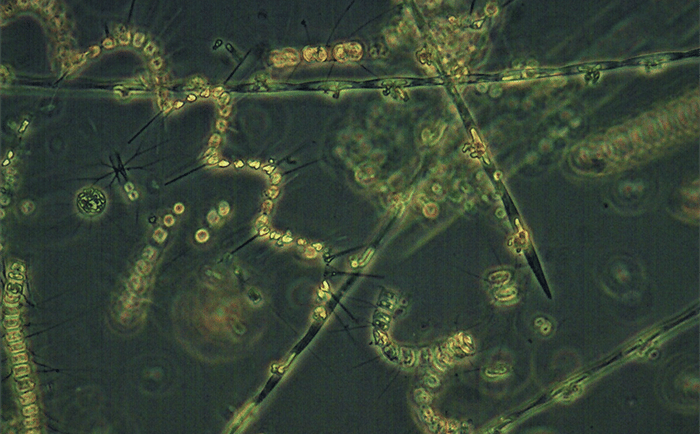
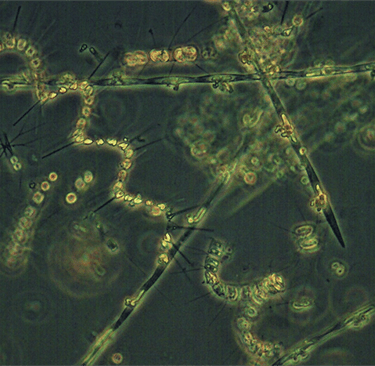
Phytobloom is a multi functional mixture designed to have all the essential nutrients needed for your bivalves, copepods, rotifers, and other filter feeders. Our living high density microalgae culture is perfect for improved coloration and health, but also at an affordable price.
Our product is ultra-dense and each algae species is packaged separately to prevent competition between each other. This is something that many aquaculture companies have failed to address; it is important to keep sensitive species like Pavlova from fast grow Tetraselmis to ensure that your microfauna flourishes.
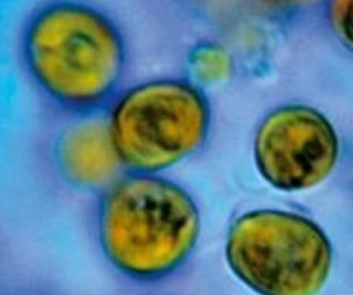
Tisochrysis Lutea-Golden Lipids
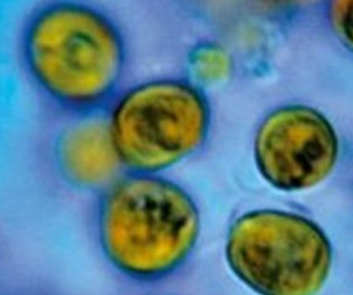
It's small size of 4-6 microns is essential for larvae all the way up to the juvenile stage. Tisochrysis is prized for it's ability to manufacture the lipids DHA and EPA, necessary for development of bivalves. Not only that, but fucoxanthin, a powerful antioxidant, is present within the algae. This species used to be classified as an Isochrysis "Taihiti" strain, but was later classified as T. Lutea. What makes this species so special is that this strain accumulates up to 20% DHA, which is why it has a golden hue. We nitrogen starve this strain right before packaging so it diverts it's sugars to make Polyunsaturated Fatty Acids.
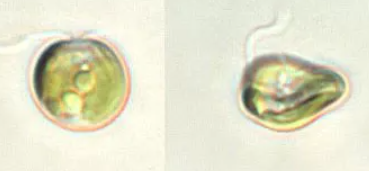
Pavlova lutheri-Sterol Producer
This marine diatom is 3-6 microns in size, and similarly to Tisochrysis, also generates high amounts of DHA and EPA. Furthermore, Pavlova is high in sterols, crucial for gonad development. However, their delicate nature makes them limited in industrial applications.
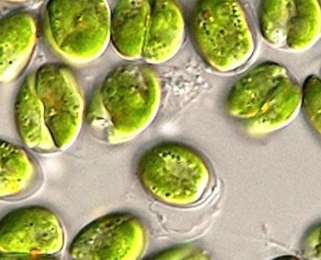
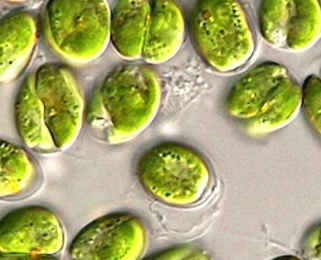
Tetraselmis Chui- Carbohydrate Powerhouse
A green phytoplankton high in carbohydrates, which help metamorphosis and juvenile/spat for energy intensive processes. Contains additional fats and starches that aid in energy.
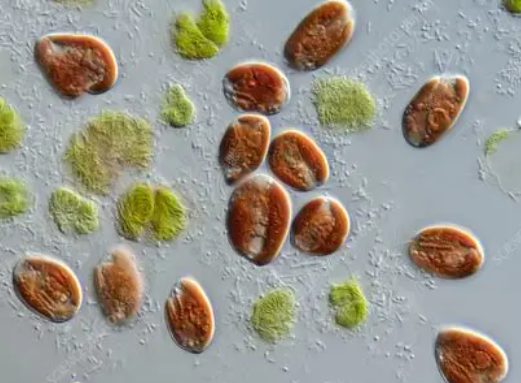
Rhodomonadas- Antioxidant and ARA Lipids
A red microalgae produced PUFA's and the essential fatty acid ARA, which is quite rare yet important when rearing pods or bivalves. Furthermore, this microalgae produced phycoerythrin, a compound useful for combating oxidative stress and giving color to coral.