
Phytoplankton for Reefers
Providing live phytoplankton blends and starter kits for your aquatic needs. Not sure where to start? Read about our phytoplankton blogs or discover our algae dosing calculator and blend formulation.
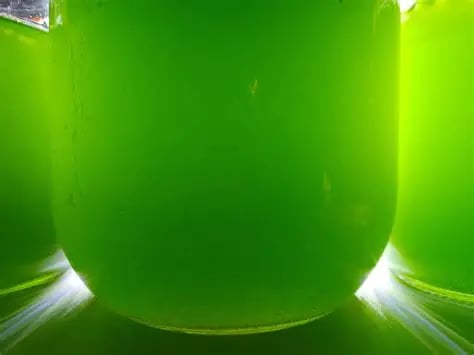
Mono Cultures
Pure live phytoplankton strains grown carefully for optimal health. Can be used as starter cultures or customized to make a unique algae blend!
Live Blends
Balanced mixtures of phytoplankton species to support diverse ecosystems or those with complex nutritional requirements like bivalve larvae. We offer custom blends below.
Everything you need to begin cultivating your own live phytoplankton including nutrients, a live starter culture, and add on features to boost your native microalgae cultivation setup.
Our Services
Every clam, oyster, or scallop you have ever eaten was a miniscule larvae relying on luck that they chance upon some nutritious larvae. Ensure your filter feeders are getting the same phytoplankton as the one percent that lived.
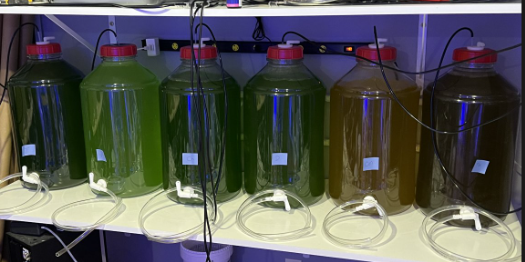
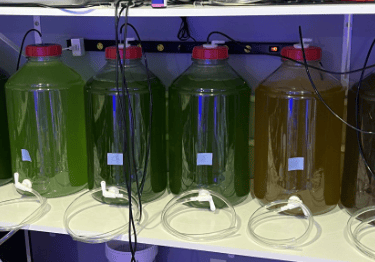
Quality Cultures
Consistent, high-grade phytoplankton for optimal larvae growth or starting your own lab grade culture!
Predictable Results
Ensuring steady outcomes with every batch supplied with reputable strains and clean manufacturing habits.
Expert Support
Guidance to maximize your aquatic organism growth rates with detailed guides, blend makers, and a dosing calculator blend.
Tailored Blends
Enter your own unique blend of phytoplankton or purchase our preformulated mix.
At Orr Biologicals, our phytoplankton blends and live cultures are designed to address all the nutritional requirements of a variety of filter feeders.
- High EPA, ARA, and DHA lipid profiles
- Protein, Amino Acids, Carbohydrates for energy
Copepods for example can consume a simple blend of nannochloropsis and isochrysis and be perfectly fine! However, we go further with sensitive filter feeders like Tridacnid clams, which have complex fatty acid and sterol requirements. In sensitive organisms like these, we specialize in delivering multiple phytoplankton strains while alive to prevent malnutrition. We grow our cultures clean, so your filter feeders do not need to worry about being wiped out in 48 hours by a Vibrio bacteria infection.
We ship our algae as fast as possible, preferably overnight or 2-day shipping. We try not to ship Thursday or Friday to prevent your precious living green gold from staying in a hot warehouse over the weekend. If you have weather in your area that will be hazardous to the algae culture, we WILL withhold your package and wait for a better time.
In the wild, a bivalve larva’s life is a lottery. They drift through vast oceans in a planktonic state, hoping to encounter a "patch" of nutrient-dense phytoplankton. Most starve before they ever find one.
At Orr Biologicals, we don't believe in luck. Our feed provides the exact cellular density found in the world’s most productive estuaries. Use the calculator below to ensure your filter feeders aren't just surviving, but thriving with the nutrition of the elite one percent.
Essential Nutrients for Filter Feeders
It is amazing that your filter feeders rely on something invisible to the naked eye. Put our cultures under a microscope and you will see how much essential nutrients our microalgae are bursting with. Filter feeders need an array of carotenoids, lipids, carbs and proteins delivered with an assortment of microalgae.
DHA (Docosahexaenoic acid) is essential for neural and retinal development in all marine organisms. We provide this lipid with many algae like Pavlova, Isochrysis, Rhodomonas, and more.
EPA (Eicosapentaenoic Acid) is a precursor to eicosanoids, which regulate immune responses to pathogens. It also prevents albino effects.
ARA (Arachidonic Acid) Is found primarily in Rhodomonas red algae and is needed to help marine organism resilience to changes.
There are so many requirements-learn more in our blog to discover all the bioactive compounds. The point is that no single algae can cover every single nutritional requirement; a harmonized blend is best.
"Effect of dietary arachidonic acid (20:4n-6) on growth, survival and hypersalinity stress tolerance of larvae of the mussel Mytilus galloprovincialis" (Journal of Experimental Marine Biology and Ecology).


15
© 2026 Orr Biologicals. All rights reserved.